Finding Your Ikigai: A Path to Purpose, Balance, and Fulfillment

In a world that often prioritizes productivity and achievement, many people find themselves asking a deeper question:
“What is all of this for?”
You may be doing all the “right” things—working hard, meeting responsibilities, staying busy—and still feel disconnected, unfulfilled, or unsure of your purpose.
This is where the concept of Ikigai can be a powerful guide.
At Haven Psychology Group, we often explore purpose and meaning as essential components of mental well-being. Ikigai offers a simple yet profound framework for understanding how to align your life with what truly matters.
What Is Ikigai?
Ikigai (pronounced ee-key-guy) is a Japanese concept that translates loosely to “a reason for being.”
It represents the intersection of four key areas:
What you love
What you are good at
What the world needs
What you can be paid for
When these areas overlap, they create a sense of purpose that is both meaningful and sustainable.
But Ikigai isn’t about finding one perfect answer—it’s about exploring alignment.
Why Purpose Matters for Mental Health
A sense of purpose isn’t just philosophical—it has real psychological benefits.
Research shows that people who feel connected to purpose tend to experience:
Greater life satisfaction
Lower levels of anxiety and depression
Increased resilience during difficult times
Stronger motivation and direction
Without purpose, it’s easy to feel:
Disconnected
Burned out
Stuck in routine
Unsure of what truly matters
The Four Elements of Ikigai
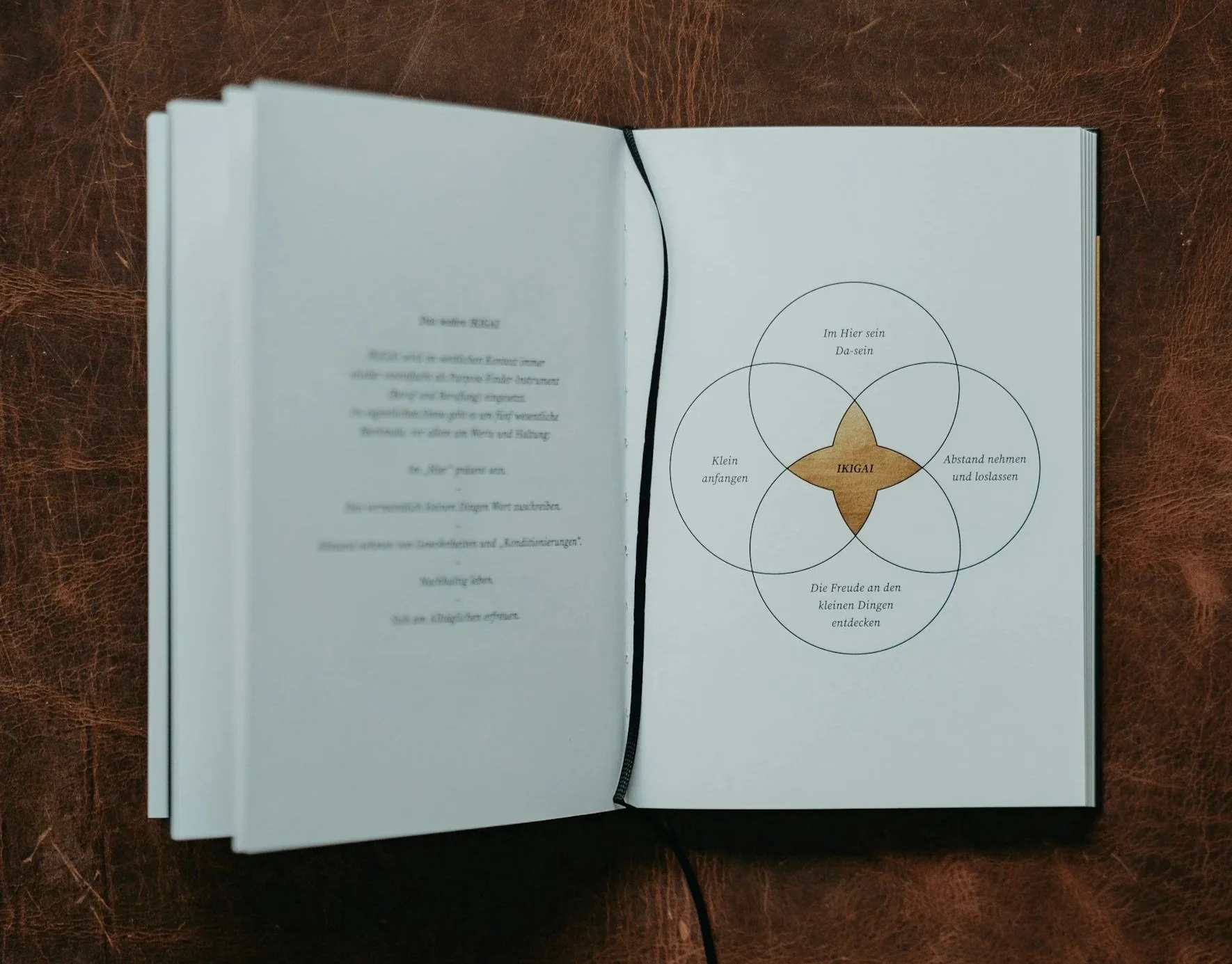
Let’s break down each part:
1. What You Love (Passion)
This includes activities, interests, or experiences that bring you joy and energy.
Ask yourself:
What do I naturally gravitate toward?
What makes me lose track of time?
2. What You’re Good At (Strengths)
These are your skills, talents, and abilities—both natural and developed.
Ask:
What do others often come to me for?
What feels easier for me than it does for others?
3. What the World Needs (Contribution)
This reflects your desire to make an impact—whether big or small.
Ask:
Where do I feel drawn to help or contribute?
What problems or causes matter to me?
4. What You Can Be Paid For (Sustainability)
This represents the practical side of purpose—how your efforts are supported in real life.
Ask:
What skills or services have value in the world?
How can I support myself while doing meaningful work?
Why Finding Your Ikigai Can Feel Difficult
Many people feel stuck because they believe:
They should already “know” their purpose
Purpose must be one clear, lifelong path
It has to be something big or impressive
But in reality:
Purpose evolves over time
It can exist in multiple areas of your life
It often develops through experience—not instant clarity

How to Start Exploring Your Ikigai
You don’t need to overhaul your life. Start small.
1. Reflect Without Pressure
Spend time journaling or thinking about each area without trying to “solve” it.
2. Notice What Energizes You
Pay attention to moments when you feel:
Engaged
Fulfilled
Connected
These are clues.
3. Experiment
Try new things:
Hobbies
Volunteer opportunities
Learning new skills
Purpose is discovered through action.
4. Let Go of Perfection
Ikigai isn’t about finding the perfect life—it’s about creating alignment over time.
5. Expand Your Definition of Purpose
Your Ikigai might not just be your career. It could include:
Relationships
Parenting
Creative expression
Community involvement
The Emotional Impact of Living Without Alignment
When your life feels disconnected from your values or interests, you may notice:
Burnout
Lack of motivation
Feeling “stuck”
Chronic dissatisfaction
These aren’t signs of failure—they’re signals that something may need to shift.
Final Thoughts
Ikigai isn’t something you find once and hold onto forever. It’s something you build, refine, and reconnect with over time. It’s found in small moments of meaning, not just major life decisions.
At Haven Psychology Group, we help individuals explore purpose, navigate life transitions, and reconnect with what brings meaning and direction.
If you’re feeling stuck, unfulfilled, or unsure of your next step, you don’t have to figure it out alone.
Contact us today and start building a life that feels more aligned, intentional, and fulfilling. Because purpose isn’t something reserved for a few—it’s something you can grow into.